
Dare County Bad Water Warnings: What Hydrant Flushing Means for You
Dare County Bad Water Warnings: What Hydrant Flushing Means for You
You check your phone or open your mail and see it: a notice from Dare County about upcoming hydrant flushing. For many residents, this announcement brings a mix of confusion and dread. Why are they doing it? And more importantly, what is going to come out of your faucet when they start?
If you live in the Outer Banks, you know that water quality can fluctuate. But during flushing season, things can get particularly messy. It’s important to understand exactly what is happening underground so you can protect your home, your laundry, and your peace of mind.
What is Hydrant Flushing?
Hydrant flushing is a routine maintenance process used by municipal water departments to clean out the water distribution system. It sounds simple enough. Utility workers open fire hydrants in specific neighborhoods and let the water run at a high velocity.
The goal is two-fold:
- Testing Flow: It ensures that hydrants are working correctly and have adequate pressure for firefighting.
- Cleaning Pipes: It clears out sediment and stagnant water from the mains.
While this process is necessary for the overall health of the municipal system, the immediate side effects for homeowners are often less than desirable.
The Mechanics of the Mess: Why Water Turns Brown
When the county opens those hydrants, they aren’t just letting water out; they are drastically changing the flow dynamics inside the pipes.
Imagine a riverbed. When the water moves slowly, dirt and rocks settle at the bottom. But if a flash flood comes through, all that sediment gets churned up and the water turns muddy. The same principle applies to your water mains.
Over time, mineral deposits, rust, and sediment settle at the bottom of the county’s iron pipes. This is normal for large water systems. However, the high velocity of flushing acts like a pressure washer inside the pipe. It scours the walls of the main lines, loosening rust, scale, and particulates that have been sitting there for months.
The Inherent Problem with County Water Systems
The uncomfortable truth is that this sediment—the rust, the dirt, the particulates—is technically always in the system. It usually sits quietly at the bottom of the pipes. Flushing just wakes it up.
When that sediment is disturbed, it doesn’t just disappear out of the hydrant. It becomes suspended in the water supply. If you turn on your tap while this suspended sediment is passing your home connection, that dirty water is pulled directly into your house.
The Consequences for Homeowners
When this “disturbed” water enters your home plumbing, the results are immediate and often frustrating.
1. Discoloration and “Tea Water”
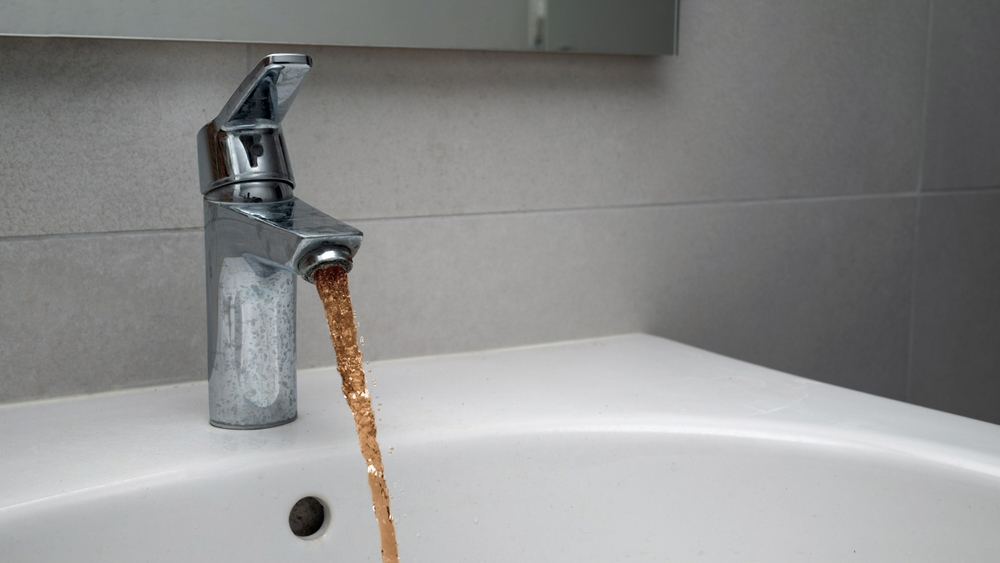
The most obvious sign is the color. Your water may range from a faint yellow to a dark, rusty brown. This is caused by oxidized iron and other minerals that were stripped from the main pipes. It looks unappealing, tastes metallic, and smells unpleasant.
2. Stained Laundry
This is perhaps the most costly annoyance. If you are unaware that flushing is happening and you run a load of whites, you could end up with permanent reddish-brown stains. The iron in the water acts like a dye. Once it sets into fabric, it is incredibly difficult to remove.
3. Clogged Aerators and Filters
The particulates stirred up by flushing are physical solids. They can travel through your pipes and get stuck in the small screens (aerators) at the end of your faucets, reducing water flow. They can also clog showerheads and wreak havoc on sensitive appliances like dishwashers and ice makers.
4. Spikes in Pressure
The flushing process can cause temporary fluctuations in water pressure. While low pressure is annoying, sudden spikes or “water hammer” effects can stress your home’s internal plumbing joints.
Is There a Way to Opt-Out?
Unfortunately, you cannot opt-out of county maintenance. The water coming from the street is out of your control. You are at the mercy of the municipal schedule and the condition of the aging infrastructure buried underground.
The county will advise you to “run your cold water tap until it clears” if you experience discoloration. While this eventually works, it wastes water and forces you to run dirty water through your home’s fixtures to clear the line. It’s a reactive measure, not a solution.
But you don’t have to just accept brown water as a fact of life in Dare County.
The Solution: Take Control of Your Water Quality
The best defense against hydrant flushing—and the sediment that is always lurking in municipal pipes—is a physical barrier between the county water supply and your home’s plumbing.
You need a system that captures the rust, dirt, and chemicals before they ever reach your kitchen faucet or washing machine.
Professional Whole-Home Filtration
Installing a professional water filtration system effectively “firewalls” your home from the chaos of the county mains. When the county flushes hydrants and sends a wave of rusty water down your street, a high-quality filtration system acts as the gatekeeper.
Systems like those provided by Island Water Treatment are designed specifically for the unique water challenges of the Outer Banks.
- Sediment Removal: High-capacity filters trap the rust and particulates so your water remains clear, regardless of what is happening in the street.
- Chemical Reduction: Beyond just dirt, these systems remove chlorine and chloramines used by the county, improving taste and smell.
- Appliance Protection: By blocking sediment, you extend the life of your water heater, dishwasher, and laundry machine.
Stop Worrying About the Next Warning
Hydrant flushing is a necessary evil of public infrastructure, but its effects shouldn’t have to enter your home. You shouldn’t have to check a schedule before you wash your clothes or pour a glass of water.
By installing a professional filtration system, you render those “Bad Water Warnings” obsolete. The county can flush all they want; your water will run clear, clean, and safe.
Don’t let rusty pipes dictate your water quality.
Discover the solution at Island Water Treatment.