Your guests arrive after a long drive, drop their bags, and head straight to the kitchen for a glass of water. That first sip sets the tone for the whole stay. If it tastes like a swimming pool or smells faintly of rotten eggs, you’ve already lost a little goodwill, and that can show up later in a review.

For families booking a beach home in Corolla, Duck, or Nags Head, small details make the difference between a good vacation and a five-star one. Water quality is one of those details that’s easy to overlook until a guest mentions it. The good news? It’s completely fixable.

This guide walks through why coastal water is tricky, how it shapes the guest experience, and which water treatment solutions for Outer Banks rental properties deliver the best results with the least fuss.

Why Water Quality Is a Real Concern for Rental Homes

Coastal water isn’t like water in most of the country. Whether your rental is on a Dare County city line or a Currituck County well, the water often arrives with problems that guests notice fast.

Here’s what shows up most often in local homes:

  • Chlorine smell and taste. Municipal plants add chlorine and chloramines to keep water safe during transport. That’s how you get the “swimming pool” odor at the tap.
  • Hard water. High levels of calcium and magnesium leave spotty dishes, stiff towels, and scale buildup on fixtures and appliances.
  • Iron staining. Well water in areas like Corolla and the Carova 4×4 zone can leave orange-brown stains in sinks, tubs, and toilets.
  • Sulfur odors. That rotten-egg smell usually points to hydrogen sulfide in well water. Learn what causes it and how to fix it.

Each of these is more than a nuisance in a rental. They touch nearly everything your guests do, from showering and cooking to running the dishwasher and pouring a glass of water for the kids.

How Bad Water Hurts the Guest Experience and Your Reviews

Guests paying premium rates for a spacious, well-appointed beach home expect everything to feel clean and cared for. Water problems quietly undercut that impression.

Think about how it plays out during a typical week:

  • A parent fills a water bottle for the beach and notices the chlorine smell.
  • Towels come out of the wash feeling stiff and scratchy.
  • Someone spots orange staining around the bathroom sink and wonders how clean the home really is.
  • The coffee tastes off, so the family buys bottled water for the rest of the trip.

None of these are dramatic on their own. Together, they chip away at the polished, worry-free stay your listing promised. And when a guest sits down to leave a review, those little frustrations often make the cut.

Reviews drive bookings. A single mention of “smelly water” or “stained sinks” can give a prospective family pause, especially the detail-oriented parents doing the research before they book months in advance. Clean, great-tasting water protects the reputation you’ve worked hard to build. See how water filtration systems add value to your Outer Banks rental home.

The Best Water Treatment Solutions for Rental Properties

The right fix depends on what’s actually in your water, which is why testing comes first. That said, a few solutions consistently work well for vacation homes. Many properties benefit from a combination.

Whole-Home Filtration

A whole-home filtration system treats water at the point it enters the house. That means cleaner water from every tap, shower, and appliance, not just the kitchen sink.

For a rental, this is the foundation. It tackles chlorine, odors, and sediment across the entire home, so guests get the same clean water whether they’re rinsing off after the beach or filling the tub for the kids.

Water Softeners

If your home battles hard water, a custom-built water softener is a smart addition. Softened water means:

  • No more spotty glasses and dishes
  • Softer, fresher-feeling towels and linens
  • Soap and shampoo that lather better
  • Less scale buildup, which protects your water heater, dishwasher, and washing machine

That last point matters for your bottom line. Hard water quietly shortens the life of the appliances you count on in a busy rental.

Reverse Osmosis Systems

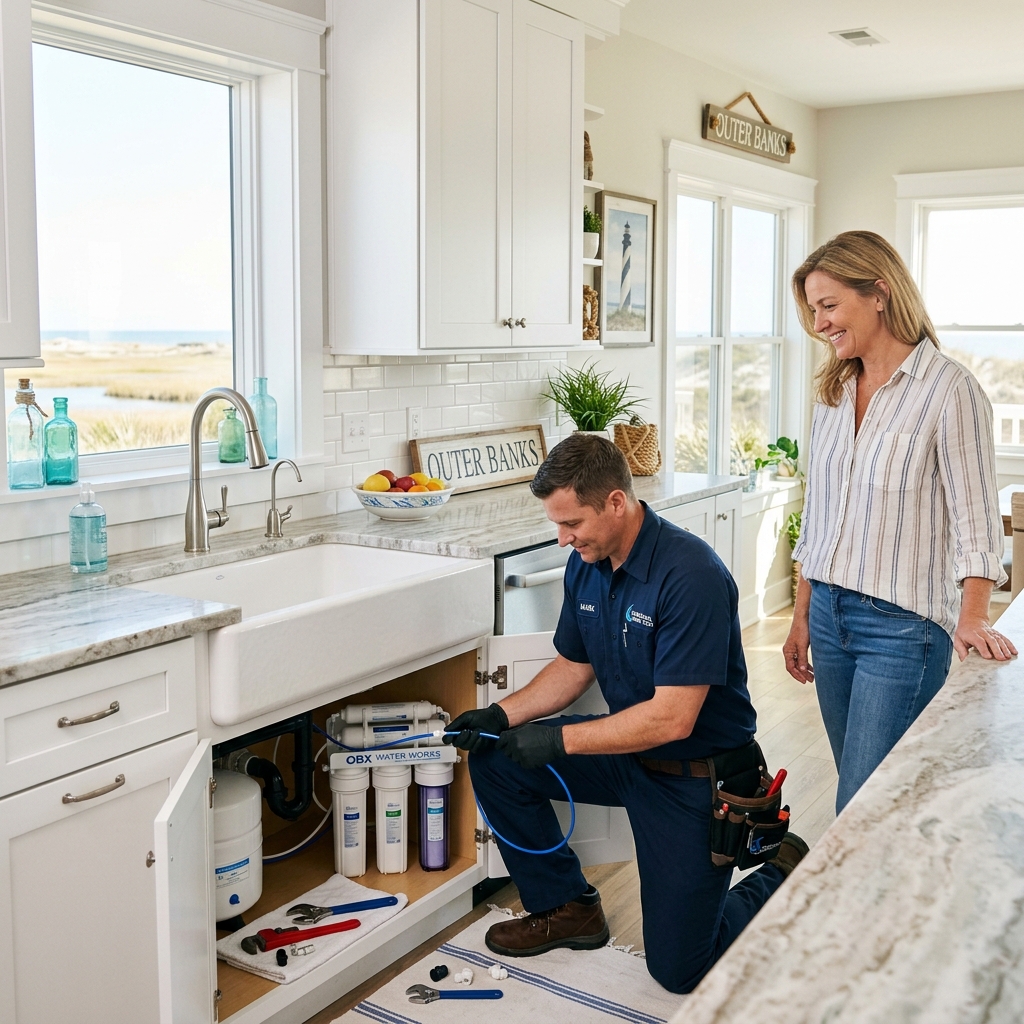
For drinking water that impresses, a reverse osmosis (RO) system is the gold standard. Installed under the kitchen sink, an RO system removes a wide range of contaminants and delivers high-purity water on demand.

Guests get crisp, clean water for drinking, cooking, and coffee, and you eliminate the excuse to run out for bottled water. It’s a small touch that signals a well-managed, thoughtful home. Find out why professional local installation beats big-box alternatives.

Bottleless Water Coolers

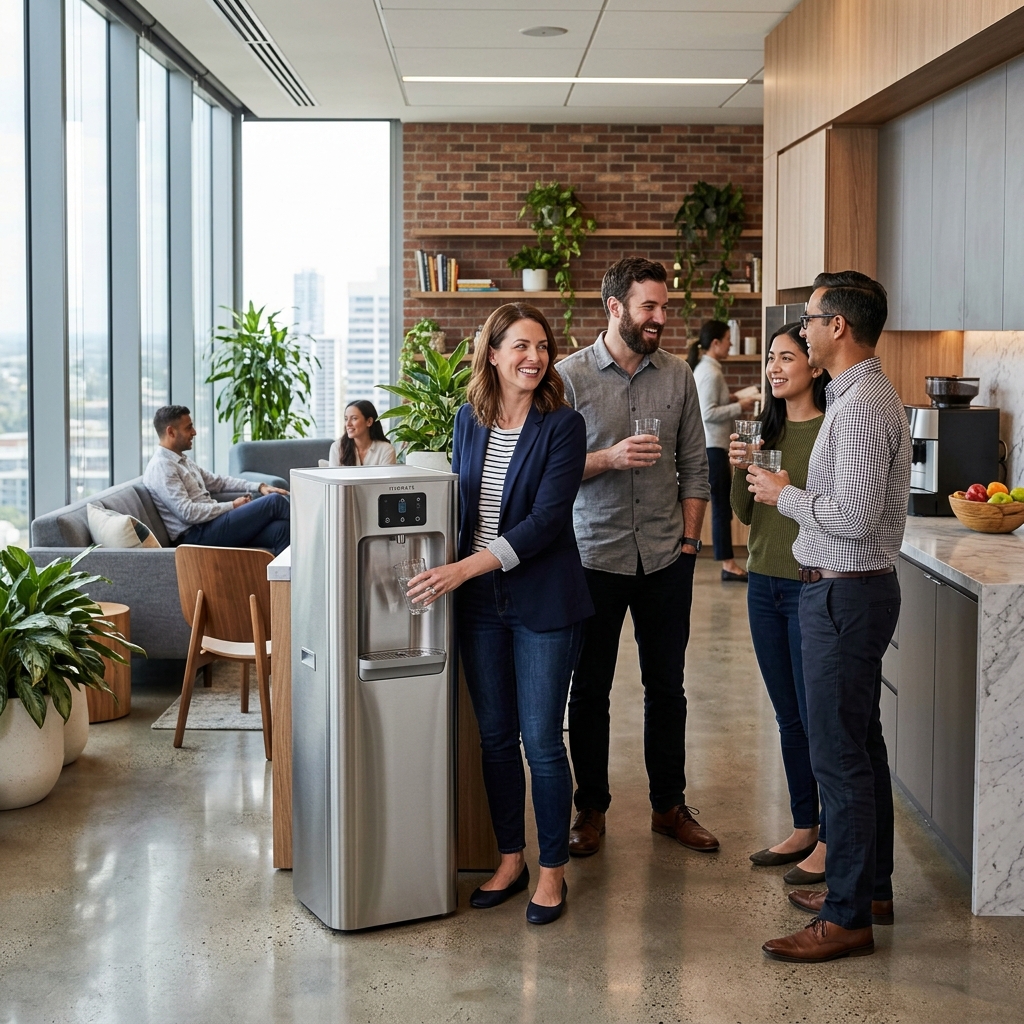
For larger homes or properties that host big family groups, a bottleless water cooler is a guest favorite. It produces its own filtered water on demand, so there are no heavy jugs to store or replace.

Families love having cold, filtered water ready at all times, especially with kids constantly refilling cups and beach bottles. You skip delivery fees and the storage headache, and guests get a premium amenity.

The ROI and Property Value Payoff

Water treatment isn’t just about comfort. For rental owners, it’s a genuine investment that pays back in several ways.

  • Better reviews and repeat bookings. A cleaner, more comfortable stay leads to higher guest satisfaction and the kind of glowing reviews that keep your calendar full.
  • Longer appliance life. By preventing scale buildup and corrosion, treatment systems extend the life of expensive appliances and cut down on repair calls between guests.
  • Lower operating costs. Softened, filtered water helps appliances run efficiently, which can trim energy bills.
  • A stronger listing. “Whole-home filtered water” and “filtered drinking water on demand” are amenities that help your property stand out to families comparing options.
  • Added property value. A professionally installed treatment system is a lasting upgrade that adds value whether you keep the home or sell it down the road.

For a home in the top rental tier, these upgrades reinforce the premium, well-cared-for experience guests are paying for.

Low-Maintenance Options Built for Rentals

Here’s the concern most owners raise: “I don’t want one more thing to manage between guests.” That’s fair. A rental needs solutions that work quietly in the background.

The good news is that modern systems are designed with exactly that in mind. Look for:

  • Maintenance-free designs with no monthly filter changes or complicated upkeep routines
  • Custom-built systems calibrated to your home’s specific water, so they perform reliably without constant adjustment
  • Streamlined, all-in-one units that combine multiple treatment methods, saving space in the utility room or crawlspace
  • Professional local support from a team that knows coastal water and can respond quickly if anything needs attention

When your system runs on its own, you get all the guest-experience benefits without adding to your turnover checklist.

Common Mistakes to Avoid

A few missteps come up again and again with rental owners. Steering clear of them saves money and frustration.

Frequently Asked Questions

What water treatment solutions work best for Outer Banks rental properties?
Most rentals benefit from a combination: whole-home filtration for cleaner water throughout the house, a water softener for hard water, and either a reverse osmosis system or a bottleless water cooler for premium drinking water. The right mix depends on your home’s water test results.

Why does my rental’s water smell like a swimming pool?
Municipal plants in Dare County add chlorine and chloramines to keep water safe in transit. Those chemicals cause the odor and taste. Whole-home filtration removes them for fresher water at every tap.

Is well water at my rental safe for guests?
It depends on your specific well. Homes in Corolla and Carova often deal with iron staining, sulfur odors, hard minerals, and bacteria. A free water test tells you exactly what’s in your water and what it needs.

Will a treatment system add a lot of maintenance to my turnovers?
Not with the right system. Many custom-built, maintenance-free options require no monthly filter changes, so they work quietly between guests with minimal attention from you.

Do water treatment systems actually add value to a rental?
Yes. They improve guest satisfaction and reviews, extend appliance life, lower operating costs, and add a lasting upgrade that strengthens both your listing and your property value.

The Bottom Line

Water is one of those quiet details that shapes how guests feel about their stay. Get it right, and it disappears into the background of a comfortable, memorable vacation. Get it wrong, and it can end up in a review.

For Outer Banks rental properties in Corolla, Duck, Southern Shores, Kitty Hawk, Kill Devil Hills, and Nags Head, the best solutions are custom-built, low-maintenance, and matched to your home’s specific water.

The smartest first step is simple: find out exactly what’s in your water. Schedule your free water test and consultation today, with zero obligation. You’ll get honest answers and a solution designed to keep your guests happy and your reviews glowing.
Pour a glass of water at your Corolla kitchen sink, take a sip, and something feels off. Maybe it tastes like a swimming pool. Maybe there’s a faint metallic edge or a hint of rotten egg. If that sounds familiar, you’re not alone, and you’re not stuck with it.

Coastal water in Dare and Currituck Counties comes with real challenges, whether you’re on a city line or drawing from a private well. The good news? You have proven ways to fix it right at the tap.

In this guide, you’ll learn what makes local water so tricky, the two best drinking water solutions for homes here, and the health, cost, and convenience payoffs of each. Let’s dig in.

Why Outer Banks Water Is So Challenging

Water quality along the Outer Banks isn’t like water in most of the country. Where you live shapes what shows up in your glass.

Dare County City Water

If you’re in Duck, Kitty Hawk, or Nags Head on a municipal line, your water travels a long way to reach you. To keep it safe in transit, treatment plants add chlorine and chloramines.

Those chemicals do their job, but you don’t need them in your home. They leave behind that “swimming pool” taste and smell, dry out skin and hair, and can carry corrosive contaminants along the way.

Currituck County Well Water

Out in Corolla and the remote Carova 4×4 area, many homes rely on private wells. That means no public utility tests or treats your water. The job is yours.

Well water in Currituck County often battles:

  • Iron and heavy metals that stain sinks, tubs, and laundry
  • Hydrogen sulfide that creates a rotten-egg odor
  • Hard minerals like calcium and magnesium that cause scale buildup
  • Bacteria and saltwater intrusion in low-lying coastal areas

What this means for you: the right fix depends on what’s actually in your water. That’s why a free water test is the smartest first move.

Why Local Reverse Osmosis (RO) Water Filter System Installation Beats DIY and Big Box Store Systems

Solution 1: Reverse Osmosis (RO) Systems

Reverse osmosis is the gold standard for clean, great-tasting drinking water. It filters your water at the point you use it most, right under your kitchen sink.

How RO Works

An RO system pushes water through a series of fine filters and a semipermeable membrane. Island Water Treatment’s 5- and 6-stage systems are proven to remove a wide range of contaminants from both well and municipal water, including:

  • Minerals and organics
  • Heavy metals
  • Chlorine and chemical tastes
  • Sediment and cloudiness

The result is high-purity water on demand, straight from a dedicated faucet at your sink.

The Benefits That Add Up

A quality RO system does more than improve taste. It changes how you buy and use water every day.

  • Big everyday capacity: These units make up to 100 gallons of drinking water per day, plenty for a busy household.
  • Serious savings: You make your own pure water for pennies per gallon, versus the ongoing cost of bottled water.
  • Space-friendly design: The system tucks neatly under your kitchen sink, out of sight.
  • Eco-friendly: No more plastic bottles piling up or heading to the landfill.

For a family in Nags Head who’s tired of hauling cases of bottled water, an under-sink RO system pays off fast, in both money and hassle.

Bottleless Water Coolers for Outer Banks & Currituck Homes and Businesses

Solution 2: Bottleless Water Coolers

Love the convenience of a water cooler but hate the heavy jugs? A bottleless water cooler gives you the best of both.

A Smarter Alternative to 5-Gallon Delivery

Traditional bottle-style coolers mean recurring delivery fees, constant reorders, and lifting awkward 5-gallon jugs. A bottleless cooler skips all that by producing its own filtered water on the spot.

Here’s what you gain:

  • Lower ongoing costs, since the unit filters your own water
  • No plastic jugs to store, swap, or trip over
  • Fewer injuries from lifting and hauling heavy bottles
  • Filtered water on demand, whenever you want it

Perfect for Homes and Businesses

Whether it’s a busy family home in Kitty Hawk or a small business office near the beach, a bottleless cooler keeps the convenience you love while dropping the recurring bills and the storage headaches for good. Learn more about switching from 5-gallon water delivery on the Outer Banks.

The Health, Cost & Convenience Payoff

Both solutions deliver on the three things Outer Banks homeowners care about most. Here’s how they stack up.

Better Health for Your Family

Clean drinking water touches nearly everything you do: drinking, cooking, brewing coffee, washing produce, and filling water bottles. Removing contaminants means water that tastes, smells, and feels better. Learn more about the health benefits of reverse osmosis for your family.

Real Money Savings

Stop paying premium prices for bottled water and delivery. Making your own filtered water at home costs a fraction of store-bought options, and it protects appliances and plumbing from mineral damage over time.

Everyday Convenience

Guaranteed clean, fresh water on demand, no reordering, no heavy lifting, no waiting for a delivery truck. That’s the kind of worry-free upgrade that fits coastal life.

Common Mistakes to Avoid

A few missteps come up again and again with local homeowners. Steering clear of them saves money and frustration.

  • Guessing at your water problem. Without a test, you’re picking a solution blind.
  • Buying a generic big-box system. Off-the-shelf units aren’t built for coastal water chemistry. Here’s why local installation beats big-box systems.
  • Ignoring well water testing. If you’re on a well in Carova or Corolla, no one else is checking your water for you.
  • Sticking with bottled water forever. The costs add up fast, and the plastic adds up faster.

What to Do Next

Choosing between an RO system and a bottleless cooler comes down to how you use water and what’s in it. Many homes benefit from both.

Here’s a simple path forward:

  1. Get your water tested to learn exactly what you’re dealing with.
  2. Match the solution to the need, RO for pure drinking water at the tap, a bottleless cooler for on-demand filtered water without the jugs.
  3. Work with a local team that knows Dare and Currituck water chemistry firsthand.

Frequently Asked Questions

What are the best drinking water solutions for the Outer Banks & Currituck?
The two most popular options are 5- or 6-stage reverse osmosis (RO) systems and bottleless water coolers. RO systems deliver high-purity water under your kitchen sink, while bottleless coolers offer on-demand filtered water without 5-gallon jugs.

Why does my Outer Banks tap water taste like chlorine?
Municipal plants in Dare County add chlorine and chloramines to keep water safe during transport. Those chemicals cause the pool-like taste and smell at your tap. An RO system removes them for cleaner, better-tasting water.

Is well water in Currituck County safe to drink?
It depends on your specific well. Homes in Corolla and Carova often deal with iron staining, sulfur odors, hard minerals, bacteria, and saltwater intrusion. A free water test tells you exactly what’s in your water and what it needs.

How much water does an RO system make?
Island Water Treatment’s RO systems produce up to 100 gallons of drinking water per day, easily enough for a household. They fit under your kitchen sink and make pure water for pennies per gallon.

Are bottleless water coolers cheaper than 5-gallon delivery?
Usually, yes. Bottleless coolers produce their own filtered water, so you skip delivery fees, reorders, heavy lifting, and storage. Over time, that adds up to real savings.

Do I really need a water test first?
It’s the smartest first step. A test reveals your exact water profile so you get the right solution instead of guessing. Island Water Treatment offers a free water test and consultation.

The Bottom Line

Coastal water in Dare and Currituck Counties brings real challenges, from chlorine and heavy metals to hard minerals and odors. Both reverse osmosis systems and bottleless water coolers solve those problems while saving you money and hassle.

The best next step is simple: find out exactly what’s in your water. Schedule your free water test and consultation today, with zero obligation. You’ll get honest answers and a solution built for your home, whether you’re in Corolla, Duck, Kitty Hawk, Nags Head, Currituck or out in Carova.

If your home in Currituck County runs on well water, you’ve probably wondered what’s really coming out of your tap. Maybe the water smells like rotten eggs some mornings. Maybe there are rusty stains in your sink, or the water leaves your skin feeling dry. These are more than annoyances. They’re signs your well water may need attention.

The good news? You don’t have to guess. In this guide, you’ll learn why well water problems are so common here, what risks untreated water poses to your health and home, and how to get clear answers with a free water test.

Why Well Water Is a Concern in Currituck County

Living along the Outer Banks comes with a lot of perks. Reliable well water isn’t always one of them.

Homes in Currituck County, especially in Corolla and the remote Carova 4×4 beach area, often depend on private wells. Unlike city water, private wells aren’t treated or monitored by a public utility. That means the quality of your water is entirely up to you.

Our coastal location makes this tricky. Sandy soil, a high water table, and proximity to the ocean all affect what ends up in your well. Saltwater intrusion, shifting groundwater, and natural minerals all play a role. So even if your neighbor’s water tests fine, yours might tell a different story.

The Carova and Corolla Factor

The Carova 4×4 area is one of the most remote spots on the North Carolina coast. There’s no municipal water line running out to these homes, so wells are the only option. The same goes for many properties in Corolla.

Because these areas sit so close to the shoreline, well water here tends to face more challenges than inland wells. That’s exactly why regular testing matters so much.

Water Treatment FAQs for the Outer Banks & Currituck County: Common Questions Answered | Water Filtration Service for the Outer Banks

Have questions about Outer Banks and Currituck County water quality? Discover answers to common water treatment FAQs, including well water in Currituck, city water in Dare County, and the benefits of local, custom-built filtration systems. Learn about water filtration service for the Outer Banks and how it can improve your home’s water quality.

Common Well Water Problems in Corolla and Carova

Well water issues often show up in ways you can see, smell, or taste. Here are the most common problems local homeowners deal with.

Iron and Rust Staining

High iron levels are one of the top complaints. You’ll notice reddish-brown stains on sinks, tubs, and toilets. Iron can also clog appliances and give water a metallic taste.

Sulfur and That “Rotten Egg” Smell

If your water smells like rotten eggs, you’re dealing with hydrogen sulfide. It’s unpleasant, and it can corrode plumbing over time. This is a frequent issue in coastal wells.

Bacteria and Contamination

Private wells can pick up bacteria like coliform or E. coli, especially after heavy storms or flooding. This is one of the most serious concerns because it’s invisible. You can’t see, smell, or taste harmful bacteria. Only a test can confirm it.

Hard Water

Hard water is packed with minerals like calcium and magnesium. It leaves spots on dishes, film on your skin, and scale buildup inside pipes and water heaters. Over time, it shortens the life of your appliances.

Salt and Mineral Intrusion

Because coastal homes sit close to the ocean, saltwater can seep into groundwater. This raises sodium levels and can make water taste off. It also speeds up corrosion in your plumbing.


Health and Home Risks of Untreated Well Water

Ignoring well water problems can cost you more than a bad taste. Here’s what’s really at stake.

Health risks:

  • Bacteria like E. coli can cause serious illness
  • High nitrate levels are especially dangerous for infants and pregnant women
  • Long-term exposure to certain contaminants may affect your family’s wellness

Home and wallet risks:

  • Scale buildup damages water heaters, dishwashers, and washing machines
  • Iron and sulfur corrode pipes and fixtures
  • Staining ruins sinks, tubs, and laundry
  • Higher energy bills from appliances working harder against buildup

Think of it this way. Untreated water quietly wears down your home from the inside out. Fixing the water source protects both your family and your investment.

How Do You Know If Your Water Is Safe?

Here’s the honest answer: you can’t know for sure without a test.

Some problems, like staining or odor, are easy to spot. But the most dangerous issues, like bacteria and nitrates, are completely undetectable without proper testing. That’s why water experts recommend testing private wells at least once a year, and again after any flooding or major storm.

Testing gives you a clear picture of exactly what’s in your water. From there, you can match the right solution to the specific problem, instead of guessing or overpaying for treatment you don’t need.


How Island Water Treatment Can Help


You don’t have to sort through all this alone. Island Water Treatment specializes in well water solutions built for Currituck County homes, including the tricky wells in Corolla and Carova.

Start With a Free Water Test

The first step is simple and free. Island Water Treatment will test your well water to identify exactly what’s present, whether it’s iron, sulfur, bacteria, hardness, or something else. No guessing, no pressure.

Free Well Water Testing in Currituck County- Get Started 

Custom Water Filter Solutions for Your Home

Once you know what’s in your water, you get a solution designed around your specific needs. Every well is different, so a one-size-fits-all approach rarely works here.

Whole home water treatment systems
These treat every drop of water entering your home. That means cleaner water at every tap, shower, and appliance. Whole home systems tackle iron, sulfur, hardness, and more, protecting your plumbing and fixtures throughout the house.

Reverse osmosis systems
For the purest drinking water, a reverse osmosis system filters out contaminants down to a microscopic level. It’s a great choice for safe, great-tasting water straight from your kitchen tap. Perfect for drinking, cooking, and filling up water bottles.

Together, these options let you protect your whole home while enjoying clean, safe water where you need it most.

Common Questions About Currituck Well Water

How often should I test my well?
At least once a year, and after any flooding, storm, or noticeable change in taste, smell, or color.

My water looks clear. Do I still need a test?
Yes. Clear water can still contain bacteria, nitrates, or high sodium. Appearance alone isn’t proof of safety.

Is treatment expensive?
It depends on what your water needs. That’s the value of a free test. It helps you invest only in the treatment that solves your actual problem.

Will treatment fix the smell and staining too?
In most cases, yes. The right system removes the source of odors and stains, not just the symptoms.

Get Peace of Mind About Your Water

Best Eco-Friendly Water Filter Systems for the Outer Banks

Your well water shouldn’t be a mystery. If you live in Currituck County, Corolla, or the Carova 4×4 area, common problems like iron, sulfur, bacteria, and hard water are worth taking seriously. Untreated water can affect your family’s health and slowly damage your home.

The smartest first step is testing. It’s quick, it’s free, and it gives you real answers.

Ready to find out what’s in your water? Contact Island Water Treatment today to schedule your free water test. You’ll get honest results and a custom solution built for your home, so you can drink, cook, and bathe with confidence.

Why Local Reverse Osmosis (RO) Water Filter System Installation Beats DIY and Big Box Store Systems

Your water problem is unique. The Reverse Osmosis (RO) Water Filter System you order online doesn’t know that. It ships in a one-size-fits-all box, built for “average” water that doesn’t exist here on the Outer Banks. Then it arrives at your door, and you’re left guessing whether it can actually handle your iron stains, sulfur smell, or hard water buildup.

Here’s the truth: buying an Reverse Osmosis (RO) Water Filter System online or at a big box store often creates more problems than it solves. Poor sizing, dropped water pressure, and treatment that misses the mark are common outcomes. And when that system fails, good luck getting help from a company three states away.

In this post, you’ll learn why a professional, local Reverse Osmosis (RO) Water Filter System installation from Island Water Treatment is the smarter choice. Here’s what we’ll cover:

  • Why online and big box RO systems fall short for Outer Banks water
  • How poor sizing wrecks water pressure and treatment
  • Why remote support leaves you stranded
  • What local installation and service actually gets you

> Read more about the Best Water Filter Systems for the Outer Banks 

Outer Banks Water Isn’t “Average” Water

Water here is anything but ordinary. Well water often carries iron that stains your sinks and tubs orange. Sulfur creates that rotten-egg smell. City supplies add chlorine taste. And hard water leaves scale on fixtures and shortens the life of your appliances.

A generic RO system from an online retailer or a big box shelf assumes standard conditions. It doesn’t account for the specific mix of problems in your home. So it treats water it was never designed to treat.

Why this matters: The wrong system can’t fully remove your contaminants. You spend the money, install the unit, and still end up with water that tastes off or stains your tub.

The Sizing Problem Nobody Warns You About

Sizing is where most DIY systems fail. It’s not just about fitting under your sink. It’s about matching the system’s capacity to your water chemistry and household demand.

Improper Sizing Kills Water Pressure

An undersized RO system struggles to keep up. You turn on the tap and get a weak trickle instead of steady flow. Fill a pot, and you’re waiting far longer than you should.

Big box systems rarely factor in your home’s pressure needs or the number of people using the water. The result is a frustrating drop in performance you notice every single day.

Missed Treatment Goals

Here’s the part that stings most. You buy a system to fix a problem, then discover it can’t reach the treatment goal you needed.

Maybe it removes some chlorine but leaves the sulfur smell. Maybe it can’t handle your iron levels. A system sized without testing your actual water is a guess, and guesses fail.

Quick self-check: If your water still smells, stains, or tastes wrong after installing a DIY unit, the system was likely undersized or wrong for your water.

When It Breaks, You’re On Your Own

Every Reverse Osmosis (RO) Water Filter System needs service eventually. Filters wear out. Membranes clog. Parts fail. This is normal. What matters is who helps you when it happens.

Buy online, and your “support” is often a company in Florida or another distant state. That means:

  • Long hold times and slow email replies
  • Shipping delays for replacement parts
  • No one who can actually come to your home
  • Troubleshooting over the phone while your water sits unusable

A remote company can’t test your water, inspect your setup, or fix the real issue in person. You’re left playing technician with a system you didn’t design.

Local Companies Usually Won’t Touch Online Systems

Here’s a hard reality many homeowners discover too late. Most local plumbers and water treatment companies will not service a system you bought online or at a big box store.

Why? They didn’t install it. They can’t vouch for how it was set up. They often can’t source the exact parts. And they don’t want liability for a system that was never sized correctly in the first place.

So you’re stuck. The out-of-state seller can’t reach you, and the local pros won’t take it on. That “cheaper” online system suddenly costs you far more in stress and wasted water.

Myth vs. reality: The myth is that any RO system is basically the same. The reality is that installation, sizing, and local service determine whether your water actually improves.

Why Island Water Treatment Is the Better Choice

We take a different approach. Instead of a boxed guess, you get a system built around your home and your water.

Free Water Testing First

We start by testing your water. This tells us exactly what you’re dealing with, whether it’s iron, sulfur, chlorine, hardness, or a combination. No guessing, no assumptions.

Custom-Designed 5 and 6-Stage RO Systems

Based on your test results, we design a custom 5 or 6-stage reverse osmosis system sized for your specific needs. That means proper treatment, steady water pressure, and results you can taste.

Local Installation Done Right

Our team installs your system correctly the first time. We know Outer Banks water because we live and work here. Proper installation protects your pressure, your treatment goals, and your investment.

Ongoing Service You Can Count On

When your system needs a filter change or service, we’re right here in Dare and Currituck counties. No shipping delays. No distant call centers. Just local experts who know your system because we built it.

Why this matters: You get clean, great-tasting water and a partner who stands behind the work for years to come.

Common Mistakes to Avoid

Before you click “buy” on that online RO system, watch out for these traps:

  • Choosing by price alone. The cheapest system rarely fits your water or your home.
  • Skipping a water test. Without testing, you’re guessing at the problem and the solution.
  • Ignoring service access. Ask who fixes it when it breaks before you buy, not after.
  • Assuming DIY install is simple. Poor setup causes leaks, pressure loss, and failed treatment.

Get Water Done Right the First Time

Buying a Reverse Osmosis (RO) Water Filter System online or at a big box store might seem like an easy win. But the risks add up fast: wrong sizing, weak water pressure, missed treatment goals, and no real support when something goes wrong. Add in that local companies won’t service outside purchases, and the “deal” quickly turns into a headache.

A professional, local installation from Island Water Treatment removes all that guesswork. We test your water, design the right system, install it correctly, and stay nearby to service it for years.

Ready for water that actually works? Book your free water test today and let our local experts build the right solution for your home.


How Water Filtration Systems Add Value to Your Outer Banks Rental Home

Your guests pour a glass of water on their first night, take a sip, and wrinkle their noses. Maybe the water smells like a swimming pool. Maybe there’s a faint rotten-egg odor, or the ice tastes off. It seems small, but moments like these shape how guests feel about your entire property.

If you own a vacation rental on the Outer Banks, water quality matters more than you might think. This post explains the real water problems in Dare and Currituck counties, how they affect guest satisfaction and reviews, and how water filtration systems from Island Water Treatment turn a hidden liability into a marketable amenity. You’ll also see the concrete value these systems add, from happier guests to lower costs and longer-lasting appliances.

Outer Banks Water Comes With Real Challenges

The coast is a wonderful place to own a rental. The water, however, brings its own set of headaches, and those headaches change depending on where your property sits.

Dare County City Water

If your rental runs on municipal water, guests often notice:

  • Heavy chlorine that leaves a pool-like smell and taste in every glass
  • Chemical byproducts from the treatment process
  • Corrosive water that slowly wears on fixtures and appliances

City water is treated to be safe, but “safe” and “great-tasting” are two different things. Your guests notice the difference.

Currituck County Well Water

Private wells aren’t regulated, so quality falls entirely on you. Common complaints include:

  • High iron that stains sinks, tubs, and laundry with orange and brown marks
  • Hydrogen sulfide that creates a strong rotten-egg smell
  • Sediment that clouds the water and clogs fixtures
  • Bacteria and groundwater contamination that raise genuine health concerns

Well water can look clear one day and stain your porcelain the next. That unpredictability is exactly what you don’t want in a home guests are paying to enjoy.

Why Bad Water Hurts Your Bookings

Guests rent your home to enjoy the comforts of home. They expect to fill a glass, brew coffee, cook dinner, and grab ice without a second thought. When the water gets in the way, the whole stay suffers.

Here’s how water problems quietly chip away at your business:

  • Negative reviews. A rotten-egg smell or a chlorine taste is memorable for all the wrong reasons. Guests mention it, and future renters read it.
  • Lower guest satisfaction. Rusty stains on a tub or cloudy water signal neglect, even when the rest of the home is spotless.
  • Fewer repeat bookings. Guests who leave unhappy don’t come back, and they don’t recommend you to friends.
  • Extra maintenance headaches. Iron stains mean more scrubbing, faster fixture wear, and more turnover work between stays.

Rental guides consistently stress that kitchens and bathrooms should feel clean and home-like, with dinnerware and glasses kept free of rust and stains. Water quality sits at the root of that expectation. Clean water protects the impression your home makes.

How Island Water Treatment Solves the Problem

Best Outer Banks Water Filtration Systems


Island Water Treatment offers water filtration solutions built specifically for Outer Banks water. Two options stand out for rental owners: custom reverse osmosis systems and bottleless water coolers.

Custom Reverse Osmosis Systems for Outer Banks Homes

Reverse osmosis is the process of purifying water by removing impurities as it passes through a semipermeable membrane. Island Water Treatment customizes reverse osmosis systems to meet your rental property’s unique needs, ensuring that renters have access to clean drinking water at all times.

Bottleless Water Coolers

Bottleless water coolers are another convenient solution for keeping renters hydrated and happy. These coolers connect directly to your existing plumbing system and filter out impurities on-the-spot, providing unlimited clean drinking water without any scheduled bottle deliveries or storage concerns.

The Benefits of Choosing Island Water Treatment

By choosing Island Water Treatment for your Outer Banks rental property, you’ll enjoy

A reverse osmosis (RO) system pushes water through multiple filters and a membrane that traps contaminants too small to see. It removes chlorine, dissolved solids, sediment, and the compounds behind bad taste and odor.

Because Island Water Treatment designs each system around your specific water, your setup targets your exact issues, whether that’s chlorine in Kill Devil Hills or iron and sulfur in Corolla. Guests get crisp, clean water straight from the tap for drinking, cooking, coffee, and ice.

Bottleless Water Coolers

A bottleless cooler connects to your existing water supply and delivers filtered cold, hot, or room-temperature water on demand. There are no heavy jugs to haul, no bottles to store, and no deliveries to track. For a rental, that means unlimited fresh water for every guest without any ongoing effort from you.

The Value These Systems Add to Your Rental

Clean water does more than taste good. It delivers real, measurable returns for your property.

Better Guest Experience and Reviews

When guests can drink, cook, and make ice with clean, odor-free water, they simply enjoy their stay more. That satisfaction shows up in glowing reviews and repeat bookings, the two things that keep a rental full and profitable.

Appliance and Fixture Protection

Iron, sediment, and corrosive water shorten the life of ice makers, dishwashers, coffee makers, and water heaters. Filtration reduces buildup and corrosion, so your appliances last longer and break down less. One happy guest even noted their beach house appliances ran better after treatment.

Lower Bottled Water Costs

Many owners buy cases of bottled water for guests or lean on expensive delivery services. Between per-bottle charges, delivery fees, and storage hassles, those costs never stop. A filtration system or bottleless cooler replaces all of that with unlimited water from a system you own.

An Eco-Friendly, Marketable Amenity

Skipping bottled water cuts plastic waste, fewer delivery trucks, and less packaging. Better yet, filtered water is a genuine selling point. “Clean, filtered water throughout the home” is the kind of amenity that helps your listing stand out and appeals to guests who care about sustainability.

Peace of Mind

With a professionally installed system running quietly in the background, you stop worrying about what comes out of the tap. Your guests get dependable quality, and you get one less thing to manage between stays.

Bringing It All Together

Water quality is easy to overlook until a guest mentions it in a review. On the Outer Banks, chlorine smell, iron stains, rotten-egg odor, and sediment are common problems that can quietly cost you bookings and repeat business. Guests expect a home-like experience, and clean water for drinking, cooking, and ice is a core part of that promise.

Island Water Treatment’s custom reverse osmosis systems and bottleless water coolers solve these issues at the source. In return, you gain happier guests, better reviews, longer-lasting appliances, lower bottled water costs, and a genuine amenity that makes your listing more competitive.

The best first step is knowing exactly what’s in your water. Learn more about water filtration and drinking water solutions for the Outer Banks, then schedule your free water test and consultation with Island Water Treatment. It’s a simple way to protect your investment and give every guest a better stay.

Why Reverse Osmosis Systems Installed by Island Water Treatment Are the Perfect Solution for Outer Banks Bad Water

You fill a glass at the tap, take a sip, and pause. It tastes like a swimming pool, smells a little off, or leaves faint stains on your sink. If that sounds familiar, you’re not alone. Water quality across the Outer Banks presents real challenges, whether you’re connected to city lines in Dare County or drawing from a private well in Currituck County.

The good news is that a properly designed reverse osmosis (RO) system solves these problems at the source. And when that system is custom-built and installed by a local team who knows coastal water chemistry, you get results that a big-box filter simply can’t match.

In this guide, you’ll learn:

  • What makes Outer Banks water so difficult to drink
  • How reverse osmosis actually cleans your water, step by step
  • Why Island Water Treatment’s custom 5 and 6-stage systems work better here
  • The benefits you gain: taste, health, appliance protection, and savings

Outer Banks Water & Currituck Water Has Problems

Living on the coast is a joy. Your tap water? Not always. The issues you face depend heavily on where your water comes from, and each source brings its own headaches.

Dare County City Water

Municipal water gets treated before it reaches your home, but that treatment creates new problems of its own:

  • Heavy chlorine that leaves a pool-like smell and taste in every glass
  • Chemical byproducts like trihalomethanes (THMs) and haloacetic acids, which form when chlorine reacts with organic matter
  • Corrosive water that slowly wears down your pipes, fixtures, and appliances over time

You shouldn’t have to hold your breath before you drink. City water is safe by regulation, but “safe” and “great-tasting” aren’t the same thing.

Currituck County Well Water

Private wells aren’t regulated, which means the quality of your water is entirely your responsibility. Common complaints from well owners include:

  • High iron that leaves orange and brown stains on sinks, tubs, and laundry
  • Hydrogen sulfide that produces that unmistakable rotten-egg odor
  • Sediment that clouds your water and clogs faucets and fixtures
  • Bacteria and groundwater contamination that can pose genuine health risks

Well water can look clear one day and stain your porcelain the next. Without treatment, you’re left guessing about what’s really coming out of your tap.

How Reverse Osmosis Cleans Your Water

Reverse osmosis is one of the most effective water filtration methods available. It works by pushing your water through a series of filters and a semipermeable membrane that traps contaminants far too small to see. Here’s what happens, step by step.

1. Pre-Filtration

First, sediment and larger particles are removed. This protects the more sensitive components downstream and keeps the system running efficiently.

2. Carbon Filtration

Next, carbon filters strip out chlorine, chemical byproducts, and the bad tastes and odors that come with them. This stage is where that pool-water flavor disappears.

3. RO Membrane

The water then passes through the reverse osmosis membrane. This is the heart of the system, blocking dissolved solids, heavy metals, and microscopic contaminants that ordinary filters can’t catch.

4. Final Polish

Finally, water moves through a polishing filter that delivers crisp, clean taste right at the tap. The result is fresh, reliable water on demand, either from a dedicated faucet or your existing supply.

Now that you understand how the process works, let’s look at why the way a system is built matters just as much as the technology itself.

Why Island Water Treatment’s Custom Systems Work Better Here

Not all reverse osmosis systems are equal. A generic filter from a hardware store is built to a single standard, regardless of what’s actually in your water. That’s a problem on the Outer Banks, where water chemistry changes from town to town and even from well to well.

Island Water Treatment takes a different approach. The team designs custom 5 and 6-stage RO systems built specifically for the demands of Outer Banks water. By adding extra filtration stages, they ensure your water comes out as pure, safe, and delicious as possible.

Here’s why that local, custom approach matters:

  • Your system is matched to your source. City water in Kill Devil Hills needs different handling than well water in Corolla. A custom build targets your exact issues.
  • Multiple stages mean deeper cleaning. More filtration steps remove more contaminants, from chlorine to iron to hydrogen sulfide.
  • You work with people who know the area. Local expertise means the team already understands the water challenges specific to Dare and Currituck counties.

For example, if you’re battling rotten-egg odor and iron stains from a Currituck well, your system is configured to tackle those problems directly, rather than applying a one-size-fits-all filter and hoping for the best.

The Benefits You’ll Actually Notice

A custom RO system from Island Water Treatment does far more than improve flavor. It protects your health, your home, and your budget.

  • Better taste: Enjoy clean water for drinking, coffee, tea, cooking, and ice, without the chlorine bite or sulfur smell.
  • Health protection: Remove contaminants you can see and the ones you can’t, giving your family peace of mind with every glass.
  • Longer appliance life: Reduce the buildup and corrosion that shorten the lifespan of water heaters, dishwashers, and ice makers.
  • Real cost savings: Stop buying case after case of bottled water and cut down on costly appliance repairs.

Over a year, those bottled-water runs add up fast. An RO system pays for itself in convenience and savings while delivering better water than any store-bought bottle.

Why This Approach Works for Homes and Businesses

The same custom logic applies whether you’re outfitting a family kitchen or a busy business. Homeowners get safe, great-tasting water in every room that needs it, along with less wear on plumbing. Businesses, from restaurants to offices to rental properties, get consistent, dependable water quality that customers and staff can count on.

Free Testing, Fast Installation, and Local Service

Getting started is straightforward, and it begins with knowing exactly what’s in your water.

  • Free water testing: Island Water Treatment provides a complete water test and professional consultation at no charge for Outer Banks homes and businesses. No obligation, just clear answers.
  • 24–48 hour installation: Once your test identifies the issues, the team can typically design and install your custom system within 24 to 48 hours.
  • Ongoing support: You get reliable installation and continued service from a team that stands behind its work.

Service areas cover the region you call home, including Duck, Corolla, Kill Devil Hills, Nags Head, and communities throughout Currituck County and beyond.

Stop Guessing About Your Water

Outer Banks water comes with genuine challenges, from chlorine and chemical byproducts on city lines to iron, sulfur, sediment, and bacteria in private wells. A custom reverse osmosis system solves these problems at the source, giving you cleaner, better-tasting water while protecting your health, your appliances, and your wallet.

The first step is simple: find out exactly what’s in your water. Schedule your free water test and consultation with Island Water Treatment today, and get a custom plan built for your home.

Get cleaner water now — visit Island Water Treatment’s Reverse Osmosis Systems page.

Both Dare County city water and Currituck County well water suffer from significant quality issues. Dare County tap water often contains high chlorine and corrosive contaminants, while Currituck County well water frequently harbors iron and hydrogen sulfide. Island Water Treatment provides free water testing to identify and fix these local water problems.
Residents and vacationers alike love the Outer Banks for the beautiful beaches and coastal lifestyle. However, the local tap water often leaves much to be desired. Depending on where you live along the coast, the water flowing from your faucets could be secretly damaging your plumbing, ruining your laundry, or exposing your family to unwanted chemicals.
Homeowners generally rely on one of two primary water sources: municipal city water or private well water. Both systems face unique environmental challenges in this coastal region. From harsh chemical disinfectants to naturally occurring minerals, the water quality across the barrier islands requires professional attention.
Understanding what is in your tap water is the first step toward a healthier home. This guide explores the specific water quality problems affecting different parts of the Outer Banks and explains how a free water test from Island Water Treatment can help you find a lasting solution.

What are the main water quality issues in Dare County?

Most homes in Dare County connect to the municipal city water supply. While city water undergoes treatment at a central facility, this process introduces its own set of problems. The Dare County Water System relies heavily on chlorine to disinfect the water supply before it travels to your home. This heavy chlorination often results in tap water that smells like a swimming pool and tastes unpleasant.
Furthermore, environmental testing data reveals deeper concerns. According to the Environmental Working Group (EWG), several chemical contaminants in the Dare County Water System—such as trihalomethanes and haloacetic acids—frequently exceed recommended health guidelines. These specific contaminants form when chlorine reacts with organic matter in the water. Additionally, Dare County city water is naturally corrosive. Over time, this corrosive water slowly degrades household plumbing fixtures and shortens the lifespan of expensive appliances like water heaters and dishwashers.

Why does Currituck County well water smell bad and cause stains?

Unlike Dare County, many properties in Currituck County and the 4×4 Carova beaches rely on private well water. Because the Environmental Protection Agency does not regulate private wells, Currituck County homeowners must manage their own water quality. Currituck County well water is notoriously problematic due to the coastal soil composition.
The most frequent complaint from well water users is a strong rotten egg odor. This smell comes from hydrogen sulfide gas trapped in the groundwater. Another major issue is elevated iron levels. High iron concentration leaves stubborn orange and brown rust stains on sinks, showers, and light-colored clothing. Finally, untreated well water carries safety risks, as microorganisms, bacteria, and agricultural runoff can easily contaminate private groundwater supplies.

How can Island Water Treatment fix your Outer Banks water problems?

Generic water filters cannot solve the complex water issues found on the coast. Island Water Treatment offers custom-built filtration systems designed specifically for the Outer Banks environment. Because every home has different water chemistry, Island Water Treatment provides a Free Water Test & Consultation to pinpoint exact contaminant levels before recommending a system.
Choosing the right filtration system depends entirely on your water source:
•Choose a whole-house carbon filter and reverse osmosis system if you want to remove chlorine, chemical byproducts, and foul tastes from Dare County city water.
•Choose an Iron Breaker system if your Currituck County well water suffers from heavy iron stains and sulfur odors, as this salt-free system naturally oxidizes and removes these nuisance minerals.
•Choose a custom water softener if hard water scale is clogging your showerheads and ruining your home appliances.

Take Control of Your Home’s Water Quality Today

Clean water is essential for your family’s health and the longevity of your home’s plumbing. You do not have to settle for foul-smelling showers, stained laundry, or chemical-laden drinking water. By identifying the specific contaminants in your water supply, you can implement a permanent, cost-effective filtration strategy.
Schedule your Free Water Test & Consultation with Island Water Treatment today to discover exactly what is in your water and get a customized plan to fix it.

Frequently Asked Questions:

How much does a water quality test cost in the Outer Banks?
Island Water Treatment provides a comprehensive water test and professional consultation completely free of charge for residents in Dare County and Currituck County.
How quickly can a custom water filtration system be installed?
Once the free water test identifies your specific water issues, Island Water Treatment can typically design and install a custom filtration system within 24 to 48 hours.
Are big-box store water filters effective for coastal well water?
No. Off-the-shelf water filters from online retailers or big-box stores are rarely powerful enough to handle the extreme iron and sulfur levels found in Currituck County well water, and they often cause severe drops in household water pressure.
What are the risks of ignoring corrosive city water?
Failing to treat corrosive city water can lead to pinhole leaks in copper pipes, premature failure of water heaters, and the leaching of heavy metals into your daily drinking water.

Tired of paying for heavy 5 gallon bottles, monthly delivery fees, and constant reorders? There is a smarter way to get clean, great-tasting water at your home or business on the Outer Banks.

With bottleless water coolers and custom reverse osmosis systems from Island Water Treatment, you can skip the cost and hassle of traditional water delivery for good. Keep the convenience you love. Lose the recurring bills, the heavy lifting, and the storage headaches.

The Familiar Appeal of 5 Gallon Water Delivery

It is easy to see why so many Outer Banks homes and offices have relied on 5 gallon water delivery for years. You get fresh, filtered water without dealing with your tap. Someone drops off the bottles. You feel confident your family or staff has clean water on hand.

That convenience is real. But over time, the costs and small frustrations add up in ways most people never stop to add up.

Why 5 Gallon Delivery Costs More Than You Think

Traditional bottled water service comes with expenses that never seem to end. Month after month, year after year, you keep paying for the same water.

Here is what 5 gallon delivery often includes:

  • Ongoing delivery charges
  • Rising per-bottle costs
  • Monthly rental or service fees
  • Delivery surcharges
  • Extra costs for emergency refills
  • Added labor and time managing your supply

You are not buying water once. You are paying for it again and again, with no end in sight.

A Smarter Alternative: Bottleless Coolers and Custom RO Systems

A bottleless water cooler or custom reverse osmosis (RO) system gives you fresh, filtered water on demand, drawn right from your existing water supply. Instead of paying repeatedly for packaged water, you invest in a system that delivers clean water every single day.

For homes and businesses across the Outer Banks, that switch can mean real savings and far less hassle.

Save Money Over Time

Cost is the number one reason customers leave 5 gallon delivery behind. Those recurring charges never stop, and they only climb. A bottleless cooler or custom RO system replaces all those ongoing fees with one dependable solution that keeps working for you. The savings build the longer you use it.

Unlimited Clean Water

Running low on bottles is frustrating. It can leave your office short, inconvenience your staff, or leave your family without enough drinking water until the next delivery day. A bottleless cooler or RO system removes that worry completely. You get:

  • Unlimited access to filtered water
  • Fresh water without waiting for delivery day
  • Consistent quality from a professionally designed system
  • Clean, better-tasting water for drinking, coffee, tea, and cooking

A custom RO system targets the specific water issues at your property, so it is built for your water, your usage, and your needs.

Less Hassle, More Convenience

Traditional delivery comes with a long list of small tasks. Someone has to place orders, receive shipments, store the bottles, and swap out the empties. A bottleless or RO system makes life simpler:

  • No bottle storage
  • No lifting heavy 5 gallon jugs
  • No tracking deliveries
  • No waiting for restocks
  • No clutter in kitchens, break rooms, or offices

You just turn on the tap or use your cooler and enjoy clean water.

A Greener Choice for the Outer Banks

Bottled water delivery relies on plastic containers, fuel, delivery trucks, and repeated handling. Switching to a bottleless or RO system helps cut that impact:

  • Less plastic waste
  • Fewer delivery trucks on the road
  • Lower fuel use
  • Reduced packaging waste
  • A more sustainable way to enjoy clean water

For everyone who calls the Outer Banks home, that is a smart step toward protecting the place we all love.

Drinking Water Solutions for Homes and Businesses

Bottleless Water Coolers

Bottleless water coolers are a great fit for many settings, including:

  • Offices
  • Waiting rooms
  • Retail stores
  • Break rooms
  • Homes

They provide cold, hot, or room-temperature water without the mess of traditional bottle swaps. Your team, guests, or family gets fresh water from a sleek, simple system.

Custom Reverse Osmosis (RO) Systems

Not every property has the same water quality. A custom RO system can address concerns such as:

  • Unpleasant taste
  • Odor issues
  • Dissolved solids
  • Sediment
  • Specific water quality concerns based on your local supply

Island Water Treatment can evaluate your water and recommend the right setup for your home or business, so you get dependable results every day.

What Your Outer Banks Neighbors Are Saying

“We noticed a huge difference in our water quality immediately. No more chlorine smell, and my skin isn’t itchy anymore. Highly recommend Island Water for anyone in Corolla!” — Sarah J.

“Best investment for our beach house. The appliances are running better, and the water tastes great. The team was professional and knew exactly what our water needed.” — Mike T.

Why Choose Island Water Treatment

When you work with us, you get more than equipment. You get local service from a team that understands the unique water needs of Outer Banks customers. Here is what you can expect:

  • Professional consultation
  • Custom recommendations
  • Quality bottleless and RO systems
  • Reliable, local service
  • Clean water without the recurring hassle of delivery

Make the Switch and Start Saving Today

If you are done paying for 5 gallon bottle delivery, lifting heavy jugs, and managing constant reorders, there is a better way. Island Water Treatment can help you save money, cut waste, and enjoy unlimited clean water with a bottleless water cooler or custom RO system built for your Outer Banks home or business.

Learn more About Alternative Water Delivery Services for the Outer Banks

Contact Island Water Treatment today to schedule your zero-obligation consultation, and discover how much you can save by switching from 5 gallon water delivery for good.

Why Does My Well Water Smell? Causes & Fixes | Outer Banks & Currituck

Does your well water smell like rotten eggs, sulfur, or something musty? Learn the most common causes of smelly well water in the Outer Banks and Currituck County, what different odors mean, and how to fix the problem for good. Island Water Treatment offers local water testing and custom water treatment solutions to give your family fresh, clean water. Schedule your water test today.

Why Does My Well Water Smell Bad? A Guide for Outer Banks and Currituck County Homeowners

You turn on the tap, fill a glass, and catch a whiff of something unpleasant. Maybe it smells like rotten eggs. Maybe it has a metallic tang or a musty, earthy odor. If you rely on well water in the Outer Banks or Currituck County, you are not alone in wondering what is causing the smell and whether your water is safe to use.

Smelly well water is one of the most common water quality complaints we hear from coastal homeowners. The good news? It is almost always fixable once you know the cause. In this guide, we will walk through the most common reasons well water smells bad, what those odors actually mean, and how a local water test can point you toward the right solution.

Here is what you will learn:

  • The most common causes of smelly well water
  • Why coastal conditions make odor problems more likely
  • What different smells tell you about your water
  • How to fix the problem for good

Why Well Water Smells Are Common on the Outer Banks and Currituck County

Coastal living comes with unique water challenges. Homes in the Outer Banks and Currituck County often draw water from shallow wells in sandy, low-lying soil. That environment, combined with high humidity, fluctuating water tables, and naturally occurring minerals, creates the perfect conditions for odors to develop.

Salt air and moisture also play a role. The same dampness that affects indoor air quality can influence groundwater chemistry, encouraging bacteria growth and mineral buildup. Add in the region’s organic-rich soils, and it is easy to see why so many well owners notice strange smells in their water.

The key takeaway is simple: an odor does not always mean your water is dangerous, but it almost always means something in your water needs attention.

The Most Common Causes of Smelly Well Water

Different smells point to different problems. Let’s break down the usual suspects.

1. Sulfur or “Rotten Egg” Smell

That unmistakable rotten egg odor is the number one complaint among well owners. It comes from hydrogen sulfide gas, which forms when sulfur-reducing bacteria break down naturally occurring sulfur in groundwater.

This smell is especially common in coastal areas like Currituck County, where organic material in the soil feeds these bacteria. You might notice the odor more strongly in hot water, since heat releases the gas faster.

While small amounts of hydrogen sulfide are not usually a health hazard, the smell is unpleasant and can:

  • Make water unappealing to drink
  • Affect the taste of coffee, tea, and cooking
  • Tarnish silverware and corrode plumbing fixtures over time

2. Iron and Sulfur Bacteria

Beyond hydrogen sulfide, certain bacteria thrive in well systems and create both odors and slimy buildup. Iron bacteria and sulfur bacteria are common in the Outer Banks region.

These bacteria are not typically harmful to your health, but they can:

  • Produce musty, swampy, or sewage-like smells
  • Leave reddish or black slime in toilet tanks and pipes
  • Clog plumbing and reduce water flow
  • Stain sinks, tubs, and laundry

3. High Mineral Content

The groundwater beneath the Outer Banks and Currituck County often carries dissolved minerals like iron, manganese, and other dissolved solids. These minerals can give water a metallic taste and a faint odor that many homeowners describe as “earthy” or “rusty.”

High mineral content also leads to staining and scale buildup, which affects appliances, fixtures, and your overall water experience.

4. Sediment and Organic Matter

Shallow coastal wells are prone to picking up sediment, sand, and decaying organic material. When leaves, roots, and other organic matter break down near your water source, they can release musty or moldy odors.

Sediment can also cloud your water and serve as a breeding ground for the very bacteria that cause smells in the first place. If your water looks murky or leaves grit in the bottom of a glass, sediment is likely part of the problem.

5. Low Chlorine and Stagnant Water

Unlike city water, well water has no chlorine to keep bacteria in check. In homes that sit empty for stretches of time—common with seasonal and rental properties across the Outer Banks—water can sit stagnant in the system. Stagnant water encourages bacterial growth and the odors that come with it.

What Different Smells Tell You About Your Water

Your nose can offer helpful clues. Here is a quick reference:

  • Rotten eggs / sulfur: Hydrogen sulfide gas or sulfur bacteria
  • Musty, moldy, or earthy: Decaying organic matter, sediment, or bacteria
  • Metallic: Iron, manganese, or other dissolved minerals
  • Sewage-like: Bacteria buildup or, less commonly, a problem near the well or septic system
  • Bleach or chemical: Possible contamination or nearby chemical influence

Use these clues as a starting point—not a final diagnosis. The only way to know for sure what is in your water is a professional water test.

Is Smelly Well Water Dangerous?

This is the question every homeowner asks, and the honest answer is: it depends. Many odor-causing issues, like hydrogen sulfide and iron bacteria, are nuisances rather than serious health threats. They affect taste, smell, and your plumbing more than your safety.

However, some odors can signal contamination that does require attention, especially sewage-like smells that might point to bacterial issues or a problem with your well or nearby septic system. Because the causes overlap and the stakes matter, testing is the smart move. You should never guess when it comes to the water your family drinks, cooks with, and bathes in every day.

How to Fix Smelly Well Water

The right solution depends entirely on what is causing the odor. There is no one-size-fits-all fix, which is why testing comes first. Once the source is identified, common treatment options include:

  • Aeration systems to remove hydrogen sulfide gas
  • Oxidizing filters to address iron, manganese, and sulfur
  • Chlorination or shock treatment to eliminate bacteria in the well
  • Sediment filtration to capture sand and organic matter
  • Water softeners to reduce minerals that cause taste and odor issues
  • Custom multi-stage systems for homes dealing with several issues at once

The goal is to match the treatment to your specific water chemistry. A system designed for sulfur will not solve a sediment problem, and a softener alone will not eliminate bacteria. That is why a tailored approach matters so much.

Why Local Water Expertise Matters

Water quality in the Outer Banks and Currituck County is not the same as it is inland or in other parts of the state. Coastal soil, shallow wells, humidity, and seasonal usage patterns all shape what ends up in your water. A treatment plan built for local conditions will always outperform a generic, off-the-shelf product.

At Island Water Treatment, we understand the unique water challenges that come with living on the Outer Banks. We test your water to pinpoint the exact source of the odor, explain what we find in plain language, and recommend a custom solution built around your home, your well, and your family’s needs.

Common Mistakes to Avoid

Before you spend money on a fix, steer clear of these missteps:

  • Buying a treatment system before testing. Guessing wastes money and rarely solves the problem.
  • Assuming all odors are harmless. Some smells deserve a closer look.
  • Treating only the symptom. Masking an odor without addressing the cause means it will return.
  • Ignoring the problem. Many odor sources, like iron bacteria, worsen and damage plumbing over time.

Signs It’s Time to Test Your Well Water

Consider scheduling a water test if you notice:

  • A persistent rotten egg or sulfur smell
  • Musty, metallic, or sewage-like odors
  • Staining on sinks, tubs, or laundry
  • Cloudy water or sediment in your glass
  • Changes in taste or smell after the property sat unused
  • Slimy buildup in toilet tanks or fixtures

Take the Next Step Toward Fresh, Clean Water

Smelly well water is frustrating, but it is also solvable. Once you know what is causing the odor, the right treatment can give you fresh, clean water you feel good about using every day. The first and most important step is a professional water test that reveals exactly what is happening beneath your tap.

If you live in the Outer Banks or Currituck County and your well water smells off, Island Water Treatment is here to help. We will test your water, identify the source of the odor, and recommend a custom treatment solution built for your home.

Contact Island Water Treatment today to schedule your water test or consultation—and say goodbye to smelly well water for good.

NOTE – Currituck County and Corolla 4 x4 areas are largely served by well water. Dare County & the Outer Banks has mostly city water. We have water filtration solutions for the Outer Banks & Currituck County plus Hyde County.

Clean drinking water plays a big role in your family’s daily health. You use it for drinking, cooking, making coffee, washing produce, and filling water bottles before heading out the door. If your water has unwanted contaminants, odd tastes, or unpleasant odors, it can affect both peace of mind and everyday comfort.

That is where reverse osmosis can make a real difference. A reverse osmosis system helps improve water quality by reducing many common impurities, giving your family cleaner, better-tasting water right from the tap. For homeowners in the Outer Banks and Currituck County, it can be a smart way to upgrade drinking water quality and support healthier habits at home.

What Is Reverse Osmosis?

Reverse osmosis, often called RO, is a water filtration process that uses a semi-permeable membrane to reduce a wide range of contaminants from water. As water moves through the system, it passes through multiple filtration stages designed to trap and remove unwanted particles, chemicals, and dissolved solids.

A typical reverse osmosis system may help reduce:

  • Lead
  • Chlorine
  • Arsenic
  • Nitrates
  • Fluoride
  • Sediment
  • Volatile organic compounds
  • Total dissolved solids (TDS)

The result is water that is cleaner, clearer, and more pleasant to drink.

How Reverse Osmosis Improves Drinking Water Quality

One of the biggest benefits of reverse osmosis is its ability to improve the overall quality of your drinking water. Many homes have water that looks fine at first glance but still contains minerals, chemicals, or contaminants that affect taste and quality.

Reverse osmosis helps by removing many of these unwanted elements before the water reaches your glass. This can give your family greater confidence in the water you use every day.

1. It Reduces Contaminants

Contaminants in drinking water can come from many sources, including local water treatment processes, aging plumbing, environmental runoff, and naturally occurring minerals. Even when water meets basic standards, many homeowners still want a higher level of filtration for their families.

Reverse osmosis systems are valued because they can reduce a broad range of impurities in one compact solution. This makes them a popular choice for families who want cleaner water for drinking and cooking.

2. It Improves Taste and Odor

If your tap water tastes metallic, smells like chlorine, or has a flat or bitter finish, your family may avoid drinking as much water as they should. Reverse osmosis can help improve both taste and odor by reducing substances that make water less appealing.

Better-tasting water can change daily habits in a simple but important way. When water tastes fresh and clean, people are more likely to drink it regularly.

3. It Creates Better Water for Cooking

The quality of your water affects more than what you drink straight from the glass. It also affects:

  • Coffee and tea
  • Soups and broths
  • Pasta and rice
  • Ice cubes
  • Baby formula
  • Washed fruits and vegetables

Cleaner water can improve the flavor of food and beverages while giving you more confidence in what your family consumes every day.

The Health Benefits of Reverse Osmosis for Families

A reverse osmosis system is not a cure-all, but it can support a healthier home by improving the quality of the water your family uses most.

Cleaner Water for Daily Use

Your family depends on drinking water throughout the day. Whether it is a child filling a water bottle before school or a parent making meals at home, cleaner water supports healthier routines.

By reducing many common contaminants, reverse osmosis helps create a safer, more reliable source of water for daily hydration and food preparation.

Better Hydration Through Better Taste

Hydration matters for energy, digestion, focus, and overall wellness. But many people simply do not drink enough water, especially if they do not like the taste of it.

When reverse osmosis improves flavor, it often encourages better hydration. That means your family may be more likely to choose water over sugary drinks, which can support healthier habits over time.

Peace of Mind for Parents

Parents want to know the water their children drink is clean and refreshing. Reverse osmosis offers extra reassurance by adding another layer of protection between your household and unwanted impurities.

That peace of mind can be especially valuable when using water for:

  • School lunch water bottles
  • Infant formula preparation
  • Cooking family meals
  • Drinking water for guests
  • Filling pet bowls

Why Reverse Osmosis Is a Smart Choice for Homes in the Outer Banks and Currituck County

Water quality concerns can vary from one area to another. Homeowners in the Outer Banks and Currituck County often want dependable water treatment options that fit their local conditions and household needs.

A reverse osmosis system can be a strong choice for homes in these coastal and nearby service areas because it helps address common concerns related to drinking water taste, odor, and unwanted dissolved contaminants. Whether your goal is better-tasting water, added confidence in your tap water, or a convenient way to reduce bottled water use, an RO system can offer a practical solution.

For families in the Outer Banks and Currituck County, working with a local water treatment expert can make the process easier. A professional can help you choose the right reverse osmosis system based on your water quality, household size, and daily use.

Learn more : The Best Water Filtration Systems for the Outer Banks 

Reverse Osmosis vs. Bottled Water

Many families turn to bottled water when they are unhappy with their tap water. While that may seem convenient, it often becomes expensive and wasteful over time.

A reverse osmosis system offers several advantages over bottled water:

  • Lower long-term cost
  • Less plastic waste
  • Cleaner water on demand
  • No need to store heavy cases
  • Convenient access from your own kitchen

Instead of buying bottled water week after week, you can enjoy filtered water right at home.

Signs Your Family May Benefit From Reverse Osmosis

You may want to consider a reverse osmosis system if:

  • Your tap water has an unpleasant taste or smell
  • You are concerned about drinking water contaminants
  • Your family buys bottled water regularly
  • You want cleaner water for cooking
  • You want to improve daily hydration habits
  • You want a simple, reliable drinking water solution

Even if your water seems acceptable, a reverse osmosis system can still be a valuable upgrade for better quality and greater confidence.

Choosing the Right Reverse Osmosis System

Not every household needs the same setup. The best reverse osmosis system depends on your water quality and your family’s needs. Important factors include:

  • The specific contaminants in your water
  • The size of your household
  • Your daily drinking water use
  • Installation space
  • Filter maintenance needs

That is why it helps to work with a local professional who understands water treatment in the Outer Banks and Currituck County. A tailored recommendation can help you get the best results without guesswork.

Final Thoughts

The benefits of reverse osmosis for your family’s health go beyond simple filtration. A quality RO system can reduce contaminants, improve taste, support better hydration, and give your family cleaner water for drinking and cooking every day.

If you live in the Outer Banks or Currituck County and want a better way to improve your drinking water, Island Water Treatment can help. Explore Island Water Treatment’s reverse osmosis solutions to find the right system for your home and enjoy cleaner, fresher water with confidence.

Contact Us for a Free Consultation